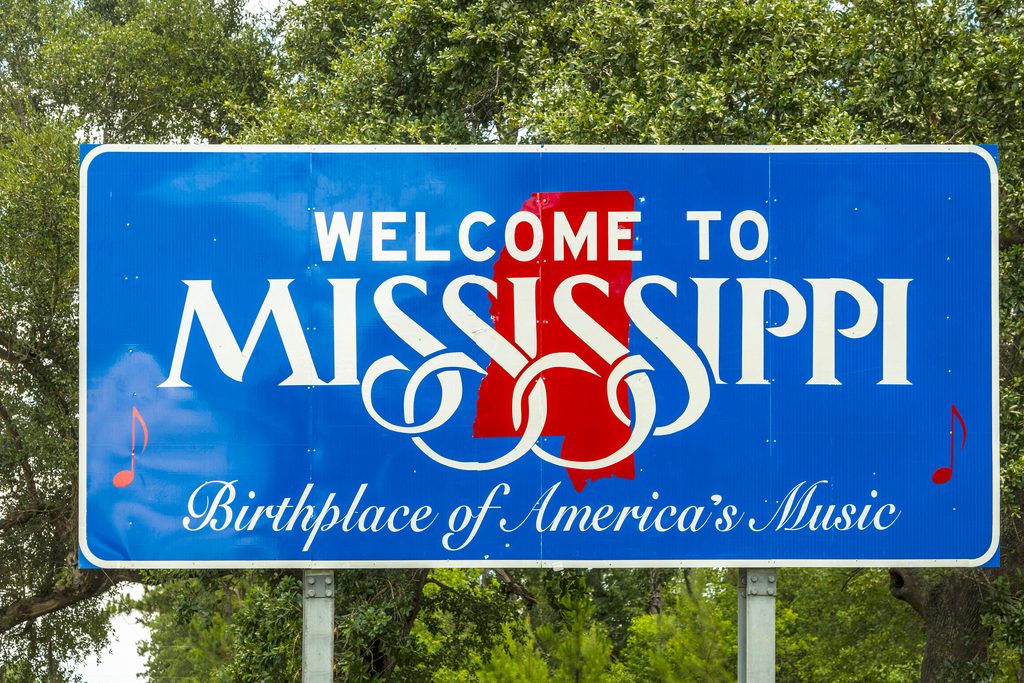

After more than seven days, Mississippi’s Senate race has finally been called, with the seat flipping from Republican to Democratic for the first time in over 40 years.
Mississippi candidates, Democrat Scott Colom and Republican incumbent Cindy Hyde-Smith, remained in a down-to-the-wire election up until Nov. 11, according to the Associated Press. Hyde-Smith lost to Colom by about 0.48%.
While the race was just a few thousand votes apart, Colom’s win marks a major milestone as he becomes the first Black senator elected in Mississippi since the country’s Reconstruction era and the first Democratic member in a Class 2 Senate seat since 1978.
“I’m very happy about it. I consider this, more or less, a miracle here in Mississippi, when you consider the state and consider the history,” said Robert Walker, Mississippi, resident and registered voter.
Mississippi is among four states that do not offer early voting, and some feel that this is a lingering effect and form of historical Black voter suppression.
Qadre Latiker, a Flowood, Mississippi, native and Florida A&M University student, said, “Mississippi is one of the blackest states—per capita—not having early voting at all, pretty much eliminates any alternative for minorities to go out and vote.”
While Latiker is an exception, because he is a college student, he could vote early absentee in Rankin County by signing a waiver. Although he meets the criteria, he acknowledges that the lack of early voting for most residents does more harm than good.
In a statement to the FAMUAN, Marlon Williams-Clark, the president of the Tallahassee Branch of the National Association of the Advancement of Colored People, acknowledges Mississippi’s volatile history shouldn’t be overlooked in this election, as leaders paved the way for Black citizens and voters.
“What we are witnessing in Mississippi is a long time coming. This moment is rooted in the work, sacrifices and organizing of Medgar Evers, Fannie Lou Hamer, James Meredith, the Freedom Riders and generations of civil rights activists who fought to make the ballot accessible to Black Mississippians,” said Williams-Clark. “Mississippi has one of the most painful histories of voter suppression and racial hostility in this country.”
According to the Census Bureau, Black residents number about 1.09 million, making up about 37% of Mississippi’s population. The majority of Black citizens reside in Jackson, Mississippi, and the Mississippi Delta. According to AP News’ live polls, these areas account for a large share of Colom’s votes.
“It shows the voting power of the Black population, what we can do if we—get out and vote and exercise our rights,” Walker said. “This is just going to motivate African Americans even more in the upcoming elections.”
While the polls had been closed for over a week, the results were not in sooner because not all ballots had been counted. Voters believe that the counting of every ballot is important, but counting provisional ballots is just as crucial, if not more, especially during this race.
Latiker said, “Those are very important—especially when the state is, you know, in the process of being flipped from red to blue.”
According to a statement made by Mississippi’s Secretary of State, Michael Watson, on Wednesday, Nov. 4, 2026, there were around 3,600 mail-in ballots yet to be counted and an unknown number of affidavit ballots. According to AP News, on Nov. 5, Watson said that about 7,000 affidavit ballots had been processed, of which 80% had been accepted.
The delay in counting the remaining ballots triggered the NAACP to deploy field staff to ensure all eligible votes are counted.
According to the NAACP’s National Field Organizer for the youth and college division, Marie Rattigan, the nonpartisan organization administers aid during all phases of the elections to states in need.
“We recognize the importance of all elections, post-elections, counting the ballots and canvassing ballots,” said Rattigan. “We provide technical support to different states if requested—and making sure that we support the efforts on the ground.”
Rattigan is now stationed in Mississippi to help combat the delay alongside their field, legal and policy team.
“We’re all alongside our Mississippi organizers. We’re tracking every ballot. We’re helping voters cure provisional or affidavit ballots, and we’re ensuring that no eligible vote is discarded,” Rattigan said. “We’re phone banking, we’re text banking and we’re canvassing.”